Blogs
-
AI in the Field of Medical Coding: Transforming Accuracy and Efficiency
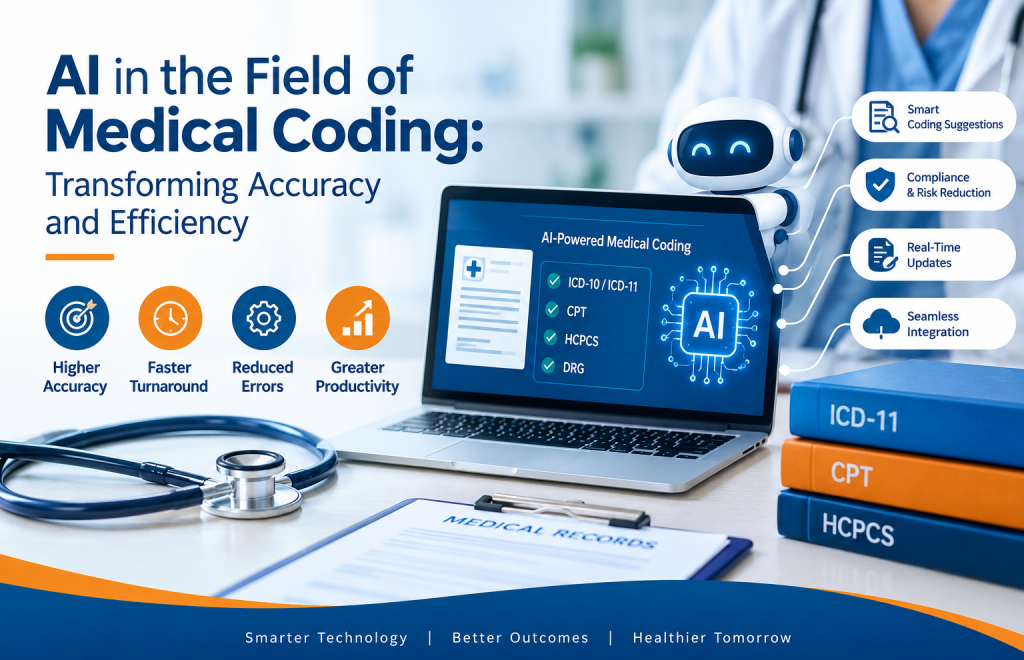
In a tech-savvy cosmos, Artificial Intelligence (AI) is rapidly transforming healthcare by helping organizations manage information more efficiently. AI is aiding to improve decision-making and deliver better patient care. One genre where AI is creating significant opportunities is medical coding.
Traditionally, medical coding has relied heavily on the expertise of professional coders who review clinical documentation and assign standardized codes for diagnoses, procedures, and services. With the gradually increasing volume and complexity of healthcare data, AI-powered solutions are now assisting coders in working faster while maintaining accuracy and compliance.
What Is AI in Medical Coding?
When it comes to utilizing AI in medical coding, it usually refers to the use of technologies such as machine learning, natural language processing (NLP), and intelligent automation to analyze clinical documentation and identify relevant medical codes.
Artificial Intelligence can carry out in-depth analysis of data from electronic health records or EHRs, physician notes, discharge summaries, operative reports, and other clinical documents. This system can seamlessly recognize medical terminology, identify diagnoses and procedures, and suggest appropriate ICD, CPT, HCPCS, or other applicable codes.
Rather than completely replacing medical coders, AI is increasingly being used as an intelligent assistant that supports coding professionals in their daily activities.
How AI Is changing the medical coding process
Traditional medical coding practice can entail manually reviewing lengthy medical records to identify relevant clinical information. This can be time-consuming, particularly when documentation contains complex medical terminology or multiple diagnoses.
Whereas using AI can analyze large volumes of documentation in a short span and, at the same time, highlight information that may be relevant for coding. For example, an AI-powered coding solution can identify a documented diagnosis, recognize its clinical context, and suggest a potential code for the coder to review.
This generates a human-in-the-loop approach, where this technology performs repetitive analysis while experienced coders provide the final validation and decision-making.
Enhancing coding accuracy
One of the most crucial merits of AI in medical coding is its potential to enhance accuracy. Before upgrading accuracy, it is pertinent to understand why coding errors occur. It’s usually because of incomplete documentation, missed diagnoses, inconsistent interpretation, or the complexity of coding guidelines.
AI tools can properly scan documentation systematically and identify relevant details that might otherwise be overlooked. They can also flag potential inconsistencies, missing information, or documentation that requires further review.
However, AI-generated suggestions still need appropriate human oversight. Medical coding contains clinical judgment, coding-related guidelines, payer requirements, as well as documentation interpretation. Professional coders remain essential for reviewing and validating AI recommendations.
Increasing coding efficiency
Medical coding departments of any healthcare facility often manoeuvres huge chunk of records, making productivity a crucial consideration. Discussing AI, it can automate repetitive tasks and reduce the amount of manual searching required by coders.
For example, AI driven systems can quickly extract diagnoses, procedures, medications, along with other relevant clinical data from documentation and process the same. Instead of spending significant time searching through records, coders can focus their attention on reviewing AI-generated suggestions and handling complex cases. This can effectively reduce coding backlogs.
The role of Natural Language Processing
Natural Language Processing, or in short NLP is one of the pivotal technologies behind AI-powered medical coding. Healthcare documentation is often drafted in natural language rather than structured coding terminology.
NLP makes sure AI system understands and interprets clinical language correctly. This technology identifies medical concepts from physician notes and other documentation. It connects those concepts with standardized coding terminology.
AI and clinical documentation improvement
When it comes to Clinical Documentation Improvement (CDI), AI can work as a perfect aid. AI-powered systems can critically analyze records to identify potential documentation gaps or inconsistencies. These findings can help coding and CDI teams determine whether additional clarification may be needed from healthcare providers.
Better documentation can support more accurate coding, enhance data quality, and provide a clearer representation of the patient’s clinical condition.
Reducing administrative work
Medical coders spend considerable time on repetitive activities such as searching documentation, reviewing terminology, and navigating coding references. AI can automate portions of these tasks precisely.
By reducing repetitive administrative work, this particular technology allows coding professionals to dedicate more time to complex cases that require expertise and judgment. This can make the overall workflow more efficient while allowing organizations to make better use of their coding workforce.
Challenges of AI in medical coding
Despite immense merits, AI adoption in medical coding comes with certain challenges. Healthcare documentation can be highly complex, and clinical language may contain abbreviations, obscure statements, or context that is rigorous for an automated system to interpret.
AI models can also produce incorrect recommendations. Therefore, organizations should not treat AI output as automatically correct.
Apart from the above, other challenges comprise system integration, staff training, data quality, algorithm transparency, and keeping AI systems aligned with changing coding guidelines and healthcare regulations.
The future of AI-assisted medical coding
The future of medical coding is likely to involve closer partnership between AI technology and skilled coding professionals. With proper utilization and also as AI systems become more sophisticated, with gradual passage of time they may cater increasingly accurate code suggestions, prioritize complex cases, and identify potential documentation or compliance issues.
The role of medical coders may gradually evolve from primarily manual code selection toward reviewing AI recommendations, resolving complex cases, interpreting documentation, and ensuring coding quality.
Conclusion
AI is bringing a new level of intelligence and automation to medical coding. It may be analyzing clinical documentation and suggesting codes to distinguishing potential errors and enhancing workflow efficiency, AI can support healthcare organizations in managing increasingly complex coding demands.
However, the future is not simply about replacing human coders with machines. As healthcare strives to flourish as more digital and data-driven, the combination of AI, skilled medical coders, and strong quality processes can help develop a medical coding environment that is seamless, faster, agile, more accurate, scalable, as well as effective.
–
-
Wearable health tech devices for monitoring health in real time
In our brisk-paced cosmos, keeping up with good health has evolved as a crucial aspect. With the rapid upscaling in the genre of technology, wearable health tech gadgets have become an essential part for monitoring our health in real time. These devices actually aid users to keep track of vital signs of the body, check and manage chronic conditions, as well as make smarter lifestyle choices. All of the monitoring is conducted from the comfort of their wrist, chest, or even their clothing. This blog delves into the world of wearable health tech, exploring how these devices function, their real-time monitoring features, and their expanding significance in preventive healthcare.
But before we proceed, it is crucial for us to understand the basic concept of health tech devices. Let’s take a look.
What are wearable health tech devices?
Wearable health tech devices are basically electronic gadgets or devices that you can wear on your body. These devices are strategically designed to collect as well as analyze health-related data of individuals. These categories of health tech devices come equipped with various sensors that monitor various physiological aspects of the human body, such as heart rate, oxygen levels, body temperature, sleep patterns, and even stress levels.
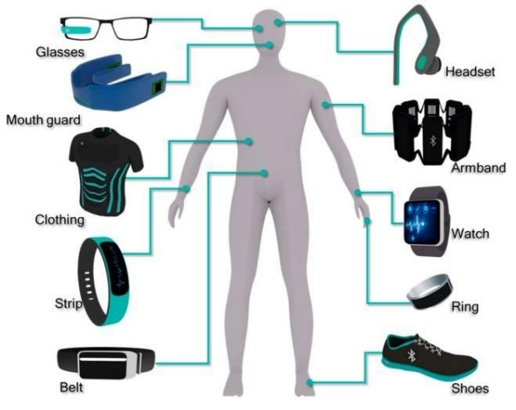
What makes these devices unique, apart from traditional diagnostic tools, is their potential to provide continuous monitoring. This typifies that both users as well as healthcare providers can seamlessly access real-time health data without needing to be in a clinical environment.
Popular types of health devices
1. Fitness Trackers –
Fitness trackers are gaining gradual popularity in the contemporary scenario. Trackers, those from companies like Fitbit and Xiaomi, are probably the most popular type of wearable tech out there. These handy bands usually keep tabs on various body aspects like: –
-Steps taken
– Calories burned
– Heart rate
– Sleep quality
Fitness trackers were initially aimed and designed for fitness buffs. However, they’ve now broadened their reach to comprise general wellness tracking.
2. Smartwatches –
Talking about smartwatches, this genre of versatile gadgets rightly fuses fitness tracking along with real-time health alerts and data. At present, these immensely popular devices can rightly track Atrial fibrillation (AFib), Abnormal heart rates, Blood oxygen levels, etc. With their gradually enhancing acceptance among mass several companies like Apple Watch, Samsung Galaxy Watch are manufacturing the same.
3. Wearable ECG Monitors
Wearable ECG Monitors have proven to be a game-changer for individuals suffering from heart related ailments or those at risk of heart problems. Several devices like the Kardia Mobile from AliveCor helps users gather clinical-grade electrocardiograms or ECGs whenever they need to.
4. Continuous Glucose Monitors (CGMs)
Continuous Glucose Monitors or in short CGMs gaining momentum among people with diabetes. CGMs like the FreeStyle Libre and Dexcom G6 cater continuous blood glucose reading related data to users. These devices empower users to manage their blood sugar levels more effectively, perfectly aiding in minimizing complications.
5. Smart Rings
Smart rings are seamless to wear and a highly beneficial health monitoring device. These rings offer a subtle way to track sleep, heart rate, body temperature, and recovery patterns. They’re stylish, powerful, and perfect for all-day monitoring.
6. Biosensing Clothing
Clothing with built-in sensors—like Hexoskin shirts or Athos gear—can monitor breathing rates, heart rate variability, posture, and muscle activity, making them fantastic for athletes or patients in rehab.
Integrating IoMT with wearable devices
When it comes to wearable technology, it proved to be a game changer in the genre of healthcare. It caters access to real-time data collection and sharing the same with the aid of the Internet of Medical Things or briefly termed as IoMT.
This interconnected loop of the network provides healthcare professionals with the ability to access as well as analyze patient information from a distance. With the aid of IoMT, early detection of health issues has become a boon for many. These devices maintain a close watch on patients and help in crafting personalized treatment plans. Seamless exchange of health-related data not only boosts clinical decision-making but also guides towards the path of better patient outcomes. The tech also supports ongoing medical research.
What is IoMT?
IoMT stands for The Internet of Medical Things. This particular technology can be rightly defined as a network of connected medical devices, software applications, along with healthcare systems that liaise over the internet.
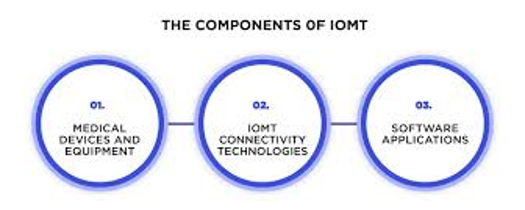
The network encompasses wireless wearables along with remote-monitoring tools that transmit health data with high security, making healthcare services more brisk, agile, as well as driven by data, all outside the usual clinical environments.
Procedure of wearable technology integration with IoMT Solutions
A thoughtful and well-researched approach is what required while integrating wearable technology into the Internet of Medical Things or IoMT especially when it comes to cybersecurity.
Safeguarding sensitive health information is essential for developing trust and encouraging patients to embrace these technologies. By adopting highly secure data protocols as well as ensuring smooth device connectivity, healthcare providers can rightly cater to real-time, data-driven care while safeguarding privacy and also adhering to regulations.
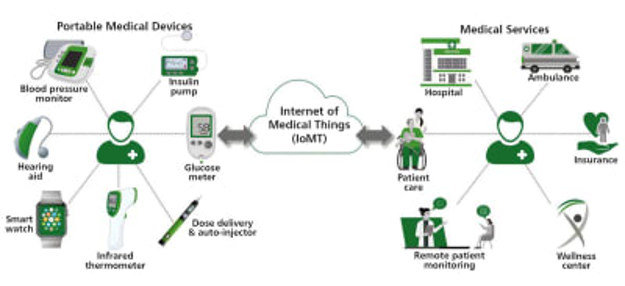
The next step narrates about using leading-edge analytics along with AI algorithms to divulge actionable insights as well as identify patterns that actually assist in making informed clinical decisions. With smartly processed data in hand, healthcare professionals can keep an eye on patient health from afar, customize treatments, and provide more personalized care.
In the end, patients can gain seamless access to their health information through user-friendly platforms. This openness helps to develop a collaborative healthcare experience, empowering both patients as well as service providers to join hands in accomplishing shared wellness goals.
Merits of wearable health tech devices
Empowerment through Information
This technology helps to make critical health metrics seamlessly available, as well as aids individuals the potential to take charge of their health.
Preventive healthcare
Early intervention is what helps the most. This helps to minimize the requirement for reactive treatments, which ultimately saves time, money, and even lives.
Chronic disease management
Wearables are particularly beneficial for those managing chronic conditions, providing updates on a regular basis and minimizing the necessity for frequent doctor visits.
Encouragement for physical activity
With step goals, heart-rate zones, and movement reminders, these devices motivate users to stay active and achieve their daily exercise goals.
Challenges of wearable health tech
● Accuracy issues
While wearables are getting better gradually, attaining the precision of medical-grade devices is still lacking. It’s crucial for users not to depend on them alone for any kind of diagnosis.
● Data privacy
When it comes to stacking and sorting sensitive health data, privacy is a big concern. For these devices, it’s crucial to ensure that data is transmitted and stored securely.
● User dependency
There’s a chance that users might become too reliant on these devices without taking proper advice from healthcare professionals.
We are thriving in a cosmos where the saying prevails, “prevention is better than cure”. It sounds true. Wearables are gradually evolving from mere gadgets into vital companions on our wellness journey, thanks to technology.
–
-
Top reasons healthcare providers are switching to outsourced medical coding
In the contemporary, rapidly evolving healthcare ecosystem, healthcare providers face more pressure than ever. Swindled reimbursements, rising administrative workloads, along with frequent coding updates, as well as increasing compliance demands, are prompting healthcare organizations to reassess their methodology for managing revenue cycle operations. One strategic shift that is gradually gaining strong momentum is outsourced medical coding.
This process, once observed as an optional cost-cutting measure, outsourcing medical coding has now become a performance-driven decision for hospitals, clinics, and specialty practices. Let’s now take a quick look at the top reasons why healthcare providers are making the switch.
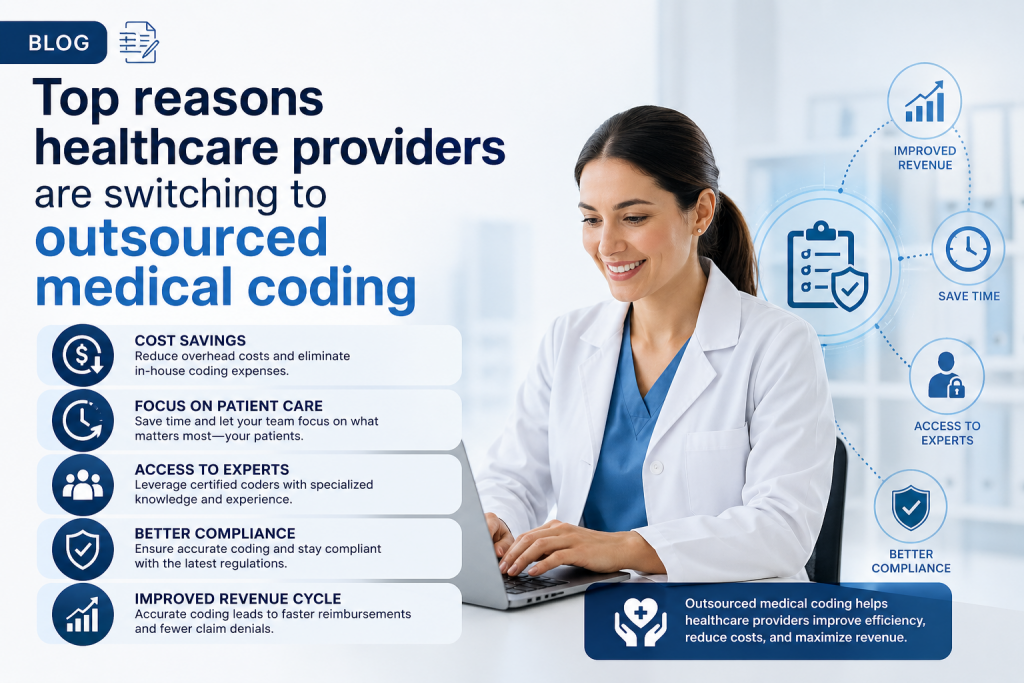
1. Growing complexity of medical coding regulations
With the advent of ICD-10-CM, CPT, HCPCS, and payer-specific guidelines, the genre of medical coding is constantly evolving and is no longer a straightforward task. Even experienced in-house teams struggle to stay up to date. A single coding error can lead to claim denials, delayed reimbursements, and other compliance-related risks.
Outsourced medical coding partners specialize exclusively in coding. Their teams receive continuous training on regulatory updates, payer policies, and specialty-specific requirements—ensuring accuracy, compliance, and peace of mind for providers.
2. Rising operational costs of In-house teams
If you are planning to sustain an in-house coding department, it can entail significant expenses, comprising staff salaries, other perks, recruitment, training, infrastructure, as well as ongoing education. Add to that the challenge of coder turnover, and the financial burden becomes even heavier.
When it comes to outsourcing, it converts fixed costs into scalable operational expenses. A client company gets the opportunity to pay only for the services they actually require, without worrying about staffing shortages or overhead—making it a more cost-effective, agile, and also predictable solution.
3. Faster turnaround times and enhanced productivity
If, by any chance delay in coding happens, it can directly affect billing cycles along with cash flow. In-house teams can often face backlogs due to staff shortages, holidays, or sudden spikes in patient volume.
Whereas outsourced medical coding teams seamlessly operate with round-the-clock productivity models, making sure faster chart turnaround as well as timely claim submissions. This results in enhanced revenue velocity and a reduction in accounts receivable (AR) days.
4. Reduced claim denials and rejections
Why do claim denials happen? Coding inaccuracies remain as one of the leading causes of claim denial. Even if minor errors occur, such as missing modifiers, incorrect diagnosis codes, or under-coding, it can cater a significant impact on reimbursement.
Professional coding service providers strictly follow quality assurance along with audit protocols, often achieving higher first-pass acceptance rates. By minimizing denials and rework, providers see a noticeable improvement in clean claims and overall revenue performance.
5. Availing access to certified and specialized coders
If you are trying to hire and retain certified coders like CPC, CCS, or specialty-specific coders, it can become a stressful and difficult task due to high demand and limited talent pools.
Whereas opting for outsourcing partners can cater instant access to highly certified and professional coders with deep expertise across multiple specialties, comprising of orthopedics, cardiology, oncology, DME, along with behavioral health. This helps in accurate documentation capture as well as optimized reimbursement without internal hiring challenges.
6. Enhanced focus on Patient Care
Patient care is of prime importance. Healthcare providers’ main job role is to care for patients and not to navigate administrative complexities. Yet coding and documentation demands often pull clinical and administrative staff away from patient-centric activities.
By outsourcing medical coding services, facilities can free up internal teams to focus on other areas like clinical excellence, patient engagement, and operational improvements. The result is better patient experiences and reduced provider burnout.
7. Enhanced compliance and risk management
Audits, penalties, as well as compliance violations can lead to serious financial and reputational consequences. It is highly essential to maintain compliance with HIPAA norms, payer audits, along with documentation standards requires ongoing vigilance.
When it comes to hiring a professional coding venture or service provider, they do prioritize compliance, data security, and audit readiness. Many service provider goes through layers of quality checks, internal audits, and compliance frameworks to mitigate risk and safeguard their provider operations.
Outsourced medical coding is no longer just a prudent solution—it’s a strategic advantage. As healthcare regulations grow more complex and financial margins tighten, providers are turning to specialized coding partners to streamline operations, reduce risk, and strengthen revenue performance.
For organizations aiming to stay competitive, compliant, and patient-focused, outsourcing professional medical coding services can prove to be a smart and future-ready choice.
–
-
Top health tech trends to watch in 2026
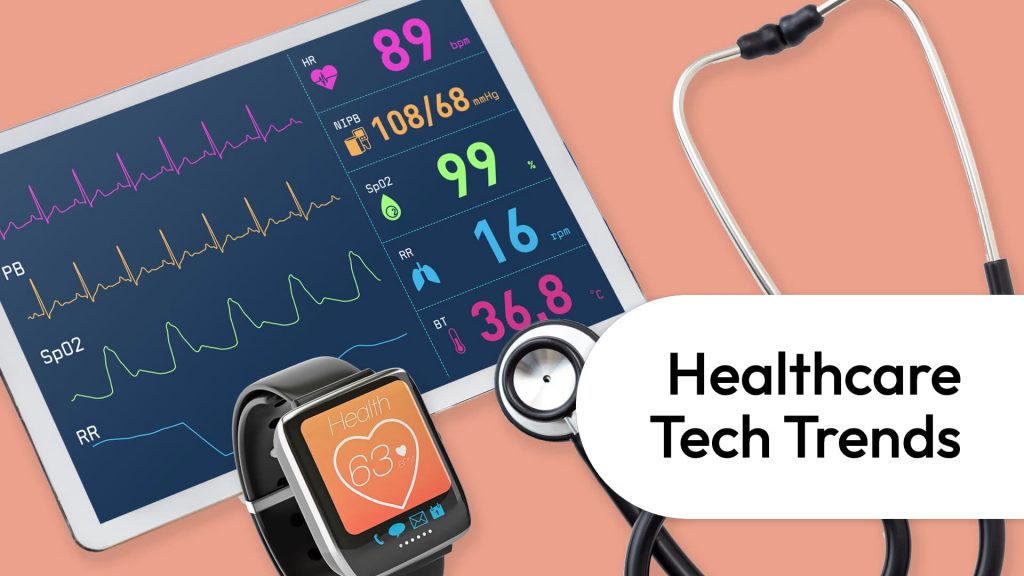
“There is no alternative to digital transformation. Those that don’t adapt will fail.” A line well narrated by Jeff Bezos, Founder, Amazon
The same narration also applies when it comes to the health sector. A powerful wave of digital innovation is gradually transforming healthcare, and the change is becoming evident. From AI-driven insights to telemedicine, smart wearables, along with intelligent data platforms for managing patient data, technology is no longer an add-on—it’s becoming the core of the modern health system.
According to a recent study, the global digital health market will surge from US$268 billion in 2025 to nearly US$797 billion by 2035, growing at a rapid 12.8% CAGR. At the same time, Imarc Group forecasts that the broader healthcare IT market will extend from around US$363 billion in 2024 to over US$909 billion by 2033. This is indeed clear proof that this digital shift is accelerating at full speed.
This gradual digital evolution marks the dawn of a new era. With highly enhanced decisions informed by real-time intelligence rather than guesswork.
Whether it’s remote monitoring that stops complications before they occur or an AI-powered diagnostic system that bring precision to treatment procedure, today’s technologies are reshaping expectations with responsibilities.
In this blog, we explore the latest or top ten healthcare technology trends fuelling this transformation. This article will help you to understand what they are, why they matter, how they’re already making an impact, and what they mean for the future of care.
Below are some of the relevant health technologies related trends that is relevant for 2025.
Artificial Intelligence and Machine Learning
The top-most position that dominates the position in the list is Artificial Intelligence and Machine Learning. These technologies are gradually transforming healthcare from inside, powering sharper diagnostics, and motivating research along with streamlining hospital workflows, and delivering care.
According to the Grand View study says that the global AI in healthcare market, valued at around USD 26.57 billion in 2024, is also projected to soar to USD 187.69 billion by 2030, expanding at a remarkable CAGR of over 38.62% between 2025 and 2030.
This exponential growth rightly depicts how AI is gradually solving some of healthcare’s toughest challenges. It might be from overwhelming data volumes to physician shortages. AI is paving the path for more accessible, efficient, as well as top-notch care.
Telemedicine
Telemedicine and remote patient monitoring or in short RPM, are rapidly transforming healthcare in current digital era. This trend is restructuring how care is delivered, especially for people managing chronic conditions. Today, approximately 83% of healthcare providers support these tools. The number is up from 73% before the pandemic. Moreover, research showcases that telemedicine can lower disease indicators, ease symptoms, along boost overall patient satisfaction. Talking about telemedicine, it caters to real-time health data, such as blood pressure or glucose readings, rightly aiding clinicians to make timely, informed decisions without requiring in-person visits. Together, these digital innovations reduce costs, enhance access, as well as break down longstanding geographic barriers in healthcare.
Virtual Reality
Virtual and augmented reality (VR/AR) are gradually emerging as powerful technology trends in healthcare. This tool is transforming how organisations train staff, plan treatment procedures, as well as deliver patient care. These immersive tools are earning widespread accolades for their immense potential to safely replicate complex real-world scenarios. This may include surgical rehearsals and also impart non-drug therapeutic options like pain management, as well as distraction therapies. Beyond training and treatment, these technologies are also paving the way for entirely new clinical workflows and more efficient healthcare operations.
Internet of Medical Things (IoMT)
The Internet of Medical Things (IoMT) is a connected ecosystem of medical-grade devices, sensors, wearables, smart implants, and supporting software that share data instantly through the internet or secure local networks. This interconnected framework powers real-time monitoring, diagnostics, asset tracking, care delivery, and seamless integration with clinical workflows.
IoMT devices span everything from everyday health wearables to advanced hospital equipment capable of transmitting data, generating alerts, and syncing with health IT systems. By enabling continuous remote monitoring of chronic patients, early detection of health issues, and smarter management of medical assets, IoMT is transforming both patient care and operational efficiency.
Cloud Computing
Talking about Cloud computing in the domain of healthcare, it comprises using remote, internet-based servers to accumulate, manage, process, as well as provide data, applications, as well as digital services. In the contemporary scenario, healthcare providers largely depend on cloud platforms to run Electronic Health Records (EHRs), clinical systems, telehealth applications, analytics engines, imaging repositories, and various patient engagement tools.
This technology offered significant merits like scalability, flexibility, along cost-effectiveness. As per an in-depth study made by KPMG, nearly 70% of healthcare organisations had already opted for cloud technologies, highlighting its emerging role in modern care delivery.
Digital transformation has become an integral part of development—it is redefining the very foundation of healthcare. As AI, telemedicine, IoMT, VR, and cloud technologies evolve, they are, with the pace of time, constantly reshaping care delivery with greater precision, connectivity, as well as agility. The future of healthcare will belong to facilities that embrace this momentum, adapt swiftly, as well as harness innovation to cater to smarter, patient-centered care.
–

Health Information
Effective healthcare hinges on managing medical data well. KPC Techno Vision’s HIM system ensures
secure, accurate data, streamlines hospital operations, enhances care, reduces errors, and complies with
HIPAA for optimal outcomes.

Utilization Management
At KPC Techno Vision, we streamline healthcare with Utilization Management to cut costs and boost efficiency. By analyzing patient data, optimizing resources, and reducing unnecessary spending, we deliver personalized, cost-effective care while maximizing hospital capacity and profits.

Medical Coding
KPC Techno Vision ensures accurate medical coding to optimize patient care and revenue cycles. Our certified coders streamline processes, reduce errors, and minimize claim denials, delivering efficient, cost-effective solutions for our healthcare facilities.

Accounts Receivable
With a team of professionals we tackle denials and underpayments by optimizing revenue cycles. Our A/R specialists use analytics to prevent future denials, recover underpaid claims, and strengthen financial health through proactive strategies.

Information Technology
KPC Techno Vision empowers its hospitals with cutting-edge IT solutions, streamlining operations, enhancing data security, and driving efficiency to deliver exceptional patient care through seamless technology integration.

Accounts Management
KPC Techno Vision elevates hospital financial health with expert Accounts Management services, optimizing cash flow, reducing denials, and streamlining reimbursements to ensure smooth, efficient operations across its healthcare network.

Release of Information
KPC Techno Vision delivers a seamless, secure Release of Information (ROI) process, safeguarding patient privacy, adhering to HIPAA standards, and ensuring timely access to records, empowering informed decisions and continuous care.

Data Management
Our data management solutions ensure accurate, secure, and organized patient information. We harness advanced technology to streamline data flow, empowering healthcare providers with insights for better decision-making and enhanced patient outcomes.
Get In Touch
We’d love to hear from you!
Contact us on :

contact@kpctechnovision.com

+91 8100107724